Ratanjot — Botanical Red Pigments & Specialty Extracts
Explore authenticated pigment-bearing roots, shikonin-related naphthoquinones and the scientific possibilities of standardized extraction and plant biotechnology.
Request a B2B Quote →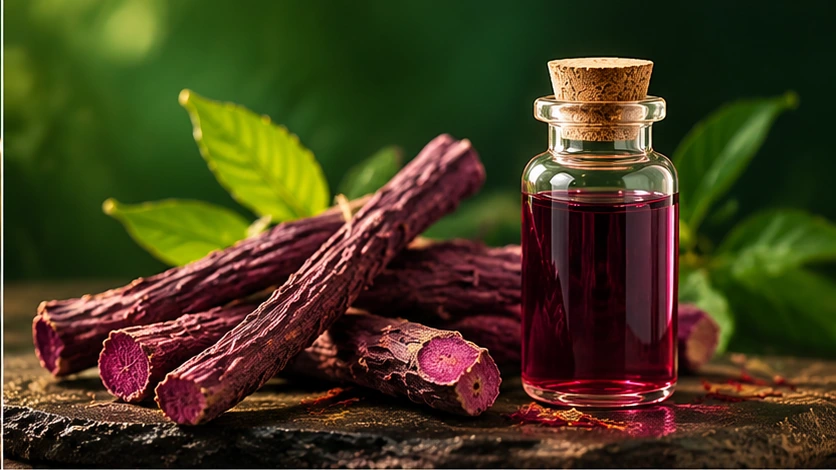
The Science Behind a Remarkable Botanical Red
Ratanjot is a traditional commercial name associated with deeply coloured botanical roots. It does not refer to a single universally defined species: plants in Arnebia and Onosma and related botanical groups may be sold under this name. Correct species authentication is fundamental because the pigment profile, sourcing considerations and permitted uses can vary.
Certain authenticated Ratanjot sources contain naturally occurring red naphthoquinone compounds, including shikonin, alkannin and related derivatives. These molecules are of interest to botanical pigment science, specialty extraction and analytical research.
A Distinctive Portfolio of Naphthoquinones
Shikonin & alkannin
Closely related red naphthoquinones that contribute to the visual character of selected pigment-bearing roots. Their relative proportions and related derivatives depend on the source material and process.
Acetylshikonin
An esterified derivative relevant to the analytical fingerprint of some Ratanjot extracts.
Isobutyrylshikonin
A naturally occurring derivative of interest for fractionation, profiling and specialty pigment research.
Total naphthoquinone extract
A proposed standardized extract class defined by measurable total pigment content and, ideally, individual constituent assays.
From Botanical Extraction to Plant Biotechnology
Conventional botanical extraction can recover coloured fractions from authenticated plant material. Plant tissue culture and controlled bioreactor cultivation offer additional research pathways for producing pigment-containing biomass with potentially improved process control.
PhytoVanta is interested in these technologies as part of its ingredient-development roadmap. Commercial productivity, batch reproducibility, downstream pigment recovery and cost of purified material require independent pilot validation; laboratory yields alone do not establish an industrial supply capability.
Technical Specifications That Matter
Identity and provenance
Accepted botanical name, plant part, geographic origin, traceability and authentication method.
Chemical standardization
Target total naphthoquinone content, individual marker profile, reference standards and validated analytical methods.
Purity and safety
Residual solvents, heavy metals, microbiological quality, contaminants and intended-market requirements.
Formulation suitability
Colour, solubility, stability, packaging compatibility and application-specific regulatory assessment.
Research and B2B Development Enquiries
Ratanjot-derived extracts may be evaluated for pigment research, phytochemical studies and selected specialty ingredient development. Their suitability for food, cosmetic or pharmaceutical use must be assessed separately; a natural botanical origin is not itself evidence of safety or legal approval.
Please share the required species, marker concentration, extract format, anticipated quantity and intended application. Product readiness, sampling and commercial terms will be confirmed individually.
Discuss your ingredient requirements
Tell us your application, target specification, quantity and destination. We will review your enquiry.
Request a B2B Quote →